Sunday, November 24, 2013

7 Reasons I Love Solfeg!

We recently posted about the history of solfeg and its usefulness in ear training.  Today I'll share 7 more reasons Let's Play Music teachers use solfeg and LOVE IT!

1. There's a Word for That


Can you imagine teaching your child to identify colors without having any color words?  Not easy!  Similarly, as students learn to discern pitches and intervals between pitches, using a system  for putting a name to the pitches (solmization) facilitates the process immensely.  China, Japan, Korea, India, and Indonesia all have solmization schemes for associating pitch to a name.  When talking about fixed pitches, we use the alphabet (C is always C) and when talking about scales and relationships between notes in a scale, we use solfeg!

2. Whole-Body Involvement


Each of our young students (and even many of our toddler Sound Beginnings students) master the  hand signs and use them to experience singing, ear-training, and note-reading with their whole body.  As they hear the pitches moving up and down, their hands move up and down through space accordingly.  As they recognize intervals and relationships between the notes, they can feel the distance of jumps between pitches and grasp them with their hands.

Adding this kinesthetic mode of learning to an auditory and visual skill heightens a child's absorption of the information, accommodates various learning styles, and facilitates integration and long-term learning.  Solfeg is a popular tool for University students majoring in music fields;  it should be shared with young children, too, who adore and quickly internalize having a physical movement to put with their singing.  You already knew wiggly, active children enjoy having actions to accompany their favorite nursery songs, right?  If there's a way to make teaching more physical AND more fun for them, let's do it!


3. Understanding Scales and Key Signatures


Would you love to be able to quickly and easily sing every major scale?  You can do it today! You don't have to memorize the notes of every single scale, just memorize the 7 solfeg syllables and start singing on whichever pitch you wish to be DO.  That's part of the power of the moveable DO  (read more here): the relationships within each scale will remain the same.

'Do' corresponds with the tonic of whatever key a particular composition or melody is placed. Thus in the Key of C major, C is Do, and in the Key of F major, F is Do.  You can see those two scales already engraved on your Let's Play Music tone bells!  Truly, any bell or piano key could be Do.  Of course you'd have to add some black keys to your scale to get it to sound like a major scale, but now after a few months of Let's Play Music training, your child could pick out (by ear) which black keys were needed.

Do is the note that the music rotates around and pivots back to. Whatever key we sing in, Do really is home!  Most songs end by bringing the melody back to Do.


4. Intervals


I recently wrote about the powerful ways that mastering intervals will help you improve musicianship in your reading, singing, and composing music.

Solfeg is a handy tool for students wishing to master interval training.  The goal is to instantaneously recognize the precise intervals when heard, and having solfeg words to identify them can be very helpful in this process.  "The notes I just heard sounded like...Do-Fa! It's a 4th!"

Here are just a few relationships I think my Let's Play Music students can hear and identify:
Do - Re : major 2nd 
Do - Mi : major 3rd 
Do - Fa: perfect 4th
Do - Sol: perfect 5th
Mi - Sol: minor 3rd  : In class we sing this as Sol-Mi more often than as Mi-Sol, but they are the same interval of course.

5. Sight Reading Music


Choir class is a very common place to find solfeg at work; students are taught to rely on solfege for sight-singing melodies.  Singers can quickly read and sing the written melody if they interpret it in terms of solfege because they have learned the relationships between each solfege note and don't need to be retaught those relationships for whatever key the music is written in.

Here are some videos of students performing 4-part vocal music they have never rehearsed, using solfeg syllables and hand signs.

At the piano, sight-reading music in the same way and hearing it with our inner voice helps us to self-correct as we play.  Solfege allows us to be able to play a tune in another key (transpose) by choosing a new DO and playing the same solfeg pattern (see an example here.)  We will practice singing and transposing this way in Purple and Orange semesters!


6. Sharps, Flats and Minor Keys


Now that we know having a way to sing the steps of a scale makes it easier to learn music, some folks have wondered why we don't prefer to sing numbered steps (1,2,3,4,5,6,7) instead of the solfeg syllables.  The word 'seven' is already less-than-popular because it is not a monosyllable, but all of the numbers become problematic if we ever want to introduce sharps or flats.  'Raised-seven' is definitely not an easy-to-sing monosyllable!

With solfeg, for a note that is lowered a half-step, we sing it with an A sound (like in the word "nay") but spell it with an e. Thus mi becomes me (may), la becomes le (lay), ti becomes te (tay), etc. This works for all scale steps except re which is already an e sound, so re lowered a half-step become ra (rah!).

For a note that is raised a half-step, we sing it with an ee sound, but spell it with an i. Thus, fa becomes fi. This works for all steps except mi and ti, but they are almost never raised anyway. 

Here are the syllables for the chromatic scales (play every single key on your piano, both black and white, as you sing):
ascending: do di re ri mi fa fi sol si la li ti do
descending: do ti te la le sol se fa mi me re ra do

In Let's Play Music class, we won't spend much time teaching the raised and lowered syllables, but it is a beautiful and simple system to grow into as your child takes interest in further musical skills.  Each year I have one or two Orange students wanting to compose in minor keys, and I do help them master me, le, and te so they can be sure to write an appropriately minor melody.


7. Solfeg Works


The final, and perhaps best, reason I want to share about why Let's Play Music teachers love solfeg is simply that it works.  Students wanting to become better musicians (and get passing-grades in their college-level music classes) find that having the right tools will get the job done.  There's no need to wait until college; solfeg can help your very young child improve musicianship right now.  

- Gina Weibel, MS
Let's Play Music Teacher 
This post was originally posted at the Making Musicians Blog

Wednesday, November 20, 2013

Staccato Road Ahead!

From NPR.org

Thanksgiving Fun!

Just a reminder: there are no music classes Monday Nov 25-30.  Don't be too sad! Here are some fun Turkey extras to keep you busy.

First Year Students

It's great fun to sing the 5 Fat Turkeys song, so you can enjoy singing along with this video that answers a few basic student questions: Can turkeys really go in trees? What do real, wild turkeys look like?

Of course you might be wanting to act it out, so craft up a felt or clay or paper version of Turkey finger puppets to play with (and make your table pretty afterward, too.)
Clay Turkey puppetturkey puppets


If you happen to have an autoharp at home, you can play this song using the chord map below, or you can point along to the map while singing with your CD.  No harp?  You could download a harp app for your ipad or just tap along while listening to your CD.  (The CD is in the key of F: Red=F, Blue=Bb, Yellow=C)

One main I love using this song on harp and keyboard for years 1 and 2 is the long string of red chords that give students a chance to focus on defining a steady rhythm before tossing a few chord changes.

Second Year Students

You're not too old for the turkey song!  Print out the chord map above, and use it to play the song on your piano.  If you haven't learned the BLUE chord in class yet, you can rest silently on that beat.

As a matter of fact, you have enough experience that you might even enjoy printing out a blank chord map, then using your ear to guess which color each triangle should be colored in.  Try playing each chord and see which sounds best!  Your ear will be your guide.


Chord maps aren't all you know how to read- you can also play from the real sheet music, and color in the chords if you like.

Third Year Students

Print out the blank chord map above and color it in (use your ear to figure out which chord is best)!  Practice playing chords with both hands and singing using your newly colored map or the sheet music.

For some really third-year work, use your right hand to play the melody of this song.
Before you begin, carefully look at the melody- there is a note played that is lower than middle C.  Can you figure out which note it is?  Walk down space, line, space below middle C....take baby steps to find out it's a G!  It's a FOURTH below C.  You have some options as to how you will play that note:  with your left hand in C position, you could just let your LH play that note when you come to it.  If you are playing the chords of the song with your LH, your chord is going to strike the G anyway, so you could decide to let your RH rest instead of playing G.  Finally, you could play it as written and have your RH jump down to G and then back up to C position.

Perhaps your uncle you only see twice a year will play a duet with you and play LH while you play RH.  Piano is a very fun way to bond!

Graduates

Have some Let's Play Music graduates in the house?  Play through the assignments for the younger years, then listen to the accompaniment as played in the video above.  Can you tell what the pianist has done with the chords to make it fancy?  During the instrumental verse, the pianist really has fun! Now YOU improvise as you play and make yours sound fancy, too!

Hint #1: Review Yankee Doodle from Orange semester for two-handed marching ideas.
Hint #2: To have a broken chord fit in 4/4 time, add one extra note, ie: Do-Mi-Sol-Mi.

Put On A Show

Now that you have at least one song to sing (and play), why not round up a few of your other favorite songs and put on a show!?  Thanksgiving is a great time for family to gather and share the love of music.  If you're lucky enough to have Let's Play Music students in different levels, you can ALL enjoy this song.  Perhaps you can also teach your relatives the parts to your favorite puppet show, and perform it together while waiting for the turkey to come out of the oven.

Happy Thanksgiving!

-Gina Weibel, MS
Let's Play Music Teacher
-This post was originally posted at the Making Musicians blog

Tuesday, October 15, 2013

Halloween coloring fun: Witches, Black Cats, Goblins, too!

Trick-or-treat!  

We have a treat for you that won't cause cavities- it's a Halloween coloring page.

Our Red semester Let's Play Music students are singing about witches, black cats, and goblins, too in our song, "Halloween is Coming".  To help you remember those tricky words, we've got a coloring page filled with those sneaky ghouls.  All will try to frighten you (but they won't be able to, will they?). 

Extend Your Vocal Range

This treat has a little trick, too- we trick the students into working out their vocals with all those ghostly howls.  The voice is an instrument and students improve with practice.  For this song, they practice making the mouth, jaw, and throat shape that will help create better tones and reach higher notes.  Hint: yawn and pay attention to the position of those parts.  While holding that mouth-shape, we step our voice up and down with the melody of the song- an excellent exercise for voice control and pitch-matching.

Read and Compose at Home

All semesters of Let's Play Music students can enjoy more fun exercises for sight-reading on bells or piano.  Here are the same Halloween pals to download and cut out.  They're round so you can use them as notes on a homemade staff (lines of tape on the floor work!).  Make a major scale!  Create a melody for bells!  Quiz each other on steps, skips, and intervals!  And finally, have a safe and fun Halloween.
The 5 fat turkeys are already looking forward to Thanksgiving, so they snuck in there.

-Gina Weibel, M.S.
Let's Play Music teacher

*Items shared via the blog are not official Let's Play Music student materials.

Tuesday, October 8, 2013

Online Game for Treble Clef Note Naming

This is a short post for my Purple Magic students: Here's a quick and fun website to drill you on your treble clef line and space note naming!

http://www.netrover.com/~kingskid/note_naming/flash_card/note_flashcard.html

Saturday, October 5, 2013

Spring Bees: A Puppet Show With Vivaldi

Our Green semester students are learning the intricacies of Spring by Vivaldi through playtime with our "Spring Bees" puppet show.  Now they want to know more about Vivaldi and more about bees!


A Few Notes About Vivaldi

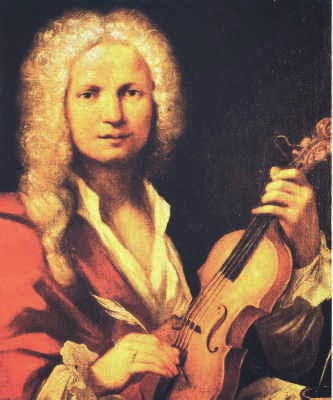
Who was born in Venice in 1678 on the same day as an earthquake, had red hair, suffered from asthma, and wrote 500 baroque concerti?  It was Antonio Vivaldi, of course.
Vivaldi's father taught him to play violin and they performed together. (Do you look forward to playing piano duets with your student?)  He was ordained a priest and nicknamed "The Red Priest" for his red hair, but left the ministry and spent most of his life composing and teaching music.  His "Four Seasons" is a very popular piece, and you're sure to enjoy this artistic rendition with some cool sand animation.

All About Bees

Several bees are cast in our Spring Bees puppet show, each doing its part to help make the hive successful.  Bee society is a fascinating subject, and we'd love to tell you more about each of the players in the show.
Here's a site with lots of photos of real bees at work!
  • The QUEEN is the mother of all the bees and can lay 1,500 eggs in one day.  She is the largest of all the bees.  She will fight any other queens she meets and can live 5-9 years.  You can hear her worry about her hive in this music!
  • The BABY bee is not really much of a baby- more of a young adult.  Bees have 4 stages of development: egg, larvae, pupa and adult.  A pupa becomes an adult during metamorphosis.  Young bees do the household chores: making wax into comb, sealing cracks with wax, and feeding the larvae.  Do the youngsters in your home do the chores?
  • The WORKERS are all females.  Honeybees are covered with fine, branched hairs that collect pollen when they crawl around the flower.  A bee gathers it from the hairs and carries it in pollen baskets on her legs.  She has a special tongue to suck up nectar and water.  Bees need water, too!
  • GUARD BEES are workers with the specific job of keeping an eye out for mammals or even ROBBER BEES from other bee colonies.  They all want the food inside the hive!
  • BEES STING only if they feel the hive is threatened.  If a honeybee stings a mammal, the barb in its stinger will stick in the thick skin and the bee will die.  However, the bee can sting other insects multiple times without harming itself.  Some species, like Bumblebees, have smooth stingers and can sting multiple times.
  • The COLONY works together like a single animal- if one part is threatened, the whole hive reacts.  In this music, you can hear how the music becomes minor when the whole hive is worried about attack.

Working in Concert

Who else besides bees are highly organized with specific roles?  Orchestras and bands! When you hear the music of the whole hive buzzing together, imagine you are conducting a bee orchestra.

The conductor helps all the musicians work together to express the dynamics of the music (volume and stylistic expression.)  Without a conductor, the musicians might play the correct notes, but some might be playing forte (loudly) when they should be playing piano (softly).  Even worse, some might play too fast or too slow and the group wouldn't stay together.  To help your child get an idea of the fun and power of conducing, enjoy this video of Mickey Mouse and his band.

As I sign off, here's a table of a few more terms your young composer might want to use as he conducts his beehive puppets this week, AND he may end up using them in his piano composition in Orange semester!

pianissimo (pp) superlative of piano- very softly
mezzo piano (mp) moderately softly
fortissimo (ff) superlative of forte- very loudly
fortississimo (fff) as loudly as possible
mezzo forte (mf) moderately loudly
forte-piano (fp) loudly followed immediately by softly
forzando (fz) >  or ^ : indicate a single tone or chord is to be accented
crescendo gradually become louder
decrescendo gradually become softer
crescendo poco a poco becoming louder little by little
crescendo subito becoming louder immediately
crescendo al fortissimo becoming gradually louder until f has been reached
crescendo ed animando gradually louder and faste 
con amore (with tenderness) con bravura (with boldness) con energia (with energy)
con espressione espressivo(with expression)
 con fuoco (with fire) con passione (with passion) con grazia (with grace)
con maesta maestoso(majestically)
scherzando schcrzoso(jokingly)
sotto voce (with subdued voice)

Have fun with your bees and Vivaldi!
- Gina Weibel, M.S.
Let's Play Music teacher

Friday, October 4, 2013

What Type of Musician Is Your Child?

Would you like to have more ease, peace, and fun during piano practice time?  Would you like music time to go more smoothly- with less yelling, arguing or bribing?  Read on to explore how understanding your child's experience and perspective can give you one tool for welcoming the joy you seek.

At the 2013 Let's Play Music symposium, teachers attended a workshop featuring the book The Child Whisperer by Carol Tuttle.  Tuttle's goal is to help parents and teachers have ease with children, through honoring the true nature of each child. 

The 4 Types

Tuttle identifies 4 Types to be profiled (not personalities, but inherent natures). All children have all types within them, but lead with a dominant one.   To get a better pinpoint on which type matches your child, read more in The Child Whisperer or get a glimpse with this brief summary:
  • Type 1 children are fun-loving, social, and spontaneous.  
  • Type 2 children are thoughtful, emotional, and in-touch with feelings. 
  • Type 3 children are physical, active, energetic, and love challenges.
  • Type 4 children are intellectual, efficient, exact, and analytical.

Type 1: Practice Must be Fun

The fun-loving child wants practice to be FUN.  She'll love to pretend she has laser-beam eyes firing at her book, to put fancy stickers on her daily practice chart, to give high-fives at the end of every single song, and to play imaginative games you invent to make practice go by.  "At the end of this song, let's do jumping jacks!"  Because everything is more fun with a friend, she'll love playing duets with a parent or sibling and performing regularly to any cheering crowd.  Although having a daily practice time is always a good idea, this spontaneous child loves to pop in and play a song or two of her choice in short bursts whenever it suits her.  She won't mind if you propose a short impromptu play time at the piano randomly during the day, and she'll have more fun with you by her side.   When composing time comes, she'll have lots of short ideas and needs to have all of them appreciated and validated before cutting it down to the themes that will become the piece.  If you feel your relationship with your Type 1 is strained, it may be a sign you need more laughing, hugging, and cheering. She feels loved by having fun with you and she'll have a long relationship with music if she identifies it as one of her playful outlets.

Type 2: I Know Exactly What to Do

Your Type-2 child is a planner.  He can see details and how they add up.  At practice time, he'll want to discuss with you exactly how many reps he'll need to do of each drill each day to meet the weekly goal, and he'll care a lot about knowing exactly what the weekly goals are. He'll want to plan out what order he'll do the songs  before starting each practice, and have a vision of exactly how long it's going to take him at his own pace.  Encourage him and let him know that he will be able to achieve the weekly goals, even when they seem large.  He cares about making life flow easily, and will want to be in on the discussion about when the practice time will be happening each day.  This sensitive child will like to hear you tell him about your feelings and emotions.  "I am happy to see you trying so hard, even though I can tell it is not always easy."  "Thank you for singing and snuggling with me in class- I sure do enjoy spending time with you."  He will enjoy singing with you or playing duets with you because it gives a sense of connection and bonding.  When composing time comes, he will feel most confident if given as many details as possible about what is expected and how the process is going to play out.  "Please come next week with four bars of melody and some block chords to harmonize."  If your Type 2 child is unhappy in class, he likely wants to talk about his feelings and be understood, without being rushed.  Reflect back to him to show that you understood. "Are you feeling nervous because you think it might sound bad the first time?" The great news is that this type of child has the patience to practice and make steady progress.

Type 3: I Can Do This!

Your determined Type-3 child is adventurous and self-motivated once she decides she wants to do this.  She loves creating results, and will appreciate if you film her each time she masters a song and put stickers on the pages so you can look back frequently and celebrate her achievements.  For the same reason, she'll love to put on mini-recitals with photo documentation.  This child will enjoy manageable challenges like striving for a perfect practice record every week, and she'll enjoy sticker charts to show her progress.  If she has a hard time getting to practice at the agreed-upon time, it's possibly because she's excited about another pursuit she's equally passionate about in the moment.  Show respect for all of her passions, and remind her of what she's accomplished.
 When she feels downhearted, reflect with her. "Remember when you could not tie your shoes, but you kept trying, and now you can do it so easily? I think if you stick with this scale, you will be able to do it very soon."  Help your child be very aware of the weekly goals.  If she is enthusiastic and puts in two hours straight to complete the goals on the first day, it may be fine to let her take a few days off to pursue other passions (but a refresher just before returning to class is a good idea.)  This is also the child most likely to request advanced options from the teacher and have the drive to achieve them.  Provide her with recordings of various piano music. She may hear a song she loves and let you know, "I MUST learn to play this song!"  Get her the sheet music and she will! 

Type 4: This is Serious Business

Your analytical child wants respect from you, and enjoys being taken as seriously as another adult.  Include him in the discussion of when and how to practice and let him know that his ideas are taken seriously.  You may be surprised at his problem-solving.  "I think the best way for me to practice without being interrupted by the little kids is if you let me stay up to practice after they are in bed."  This Type enjoys perfecting and polishing his songs, so if he is ever frustrated when the group class puts a song away, assure him that he can keep working on it at home.  For the same reason, he may get frustrated when his progress is not quick and perfect.  Assure him, "It seems you are frustrated that it's taking a long time to learn this part.  I think your progress is right on track, and it was expected that this part would be tricky.  It's okay to feel frustrated, and it doesn't mean you're not a good pianist." Because he longs for respect, ask before offering too much advice on his work.  "I heard a few mistakes in that last song; would you like me to help you notice them, or do you want to keep working on it alone for a bit longer?"  Your thoughtful child may easily fall in love with the beautiful mathematics and theory of music as well the satisfaction of playing polished pieces and mastering technique.   He is the most likely Type to appreciate knowing the many ways music lessons can affect and improve his brain and school success.  He also is the Type who will enjoy knowing the purpose of each activity in class- what theory it is teaching and what skills it helps him practice. If your Type 4 child is not enjoying class, he may feel like he's not being included in designing how to go about learning and practicing.  The great news is he'll be able to handle a mature and respectful problem-solving conversation; if you take him seriously he'll love to find the solution for making things work.

Let's Play Music!

Now as you head to class and practice time, keep your child's experience, needs, and perspectives in mind.  Many parents are aware that each of their children go about music learning in a slightly different way, often different from how the parents themselves would work through it.  Respect your child's nature while guiding him through this wonderful and sensitive period.  Let's plant the seeds of love for music and offer a platform for bonding between parent and child.

For more ideas, grab your own copy of The Child Whisperer, by Carol Tuttle.

-Gina Weibel, M.S.
Let's Play Music Teacher